
THE ART & SCIENCE OF LIGHT
Why modern lighting performance depends on putting the right engineering choices in the designer’s hands
A technical perspective on Quality of Light, application priorities and the technologies that turn fixed compromises into creative choices.
01.
Lighting performance has changed
For decades, professional lighting performance was easy to summarize: more output, greater intensity and longer throw. Those remain essential capabilities, particularly in large venues and long-throw applications. But they describe only part of what makes light useful.
Lighting designers have always modified light to serve the creative result. Color filters, diffusion, frost, correction filters, optical coatings and beam-shaping accessories were accepted even when they reduced output, because the objective was not simply to produce the greatest possible quantity of light. It was to create the right light for the application.
The goal was never maximum output. The goal was always the right light for the application.
Modern LED technology changes where that optimization can happen. Instead of accepting one fixed characteristic from the source and correcting it afterwards, modern lighting systems can increasingly make some of those choices within the fixture itself.
Two fixtures can deliver similar illuminance and still produce very different images. One may create rich, convincing saturated colors; another may lose intensity as soon as it leaves white. One may render skin naturally; another may expose spectral gaps that become obvious on camera. Two fixtures may claim the same color temperature yet make the same costume, scenic surface or face look different.
The reason is simple: a lumen value describes the quantity of visible light. It does not describe how that light is distributed across the visible spectrum, how efficiently a fixture produces difficult colors, how naturally it renders people and materials, or how consistently different fixtures reproduce the same creative choice.
That distinction matters because today’s productions rarely exist in only one visual world. A concert is experienced in the venue, enlarged on IMAG screens, captured for streaming, photographed for social media and often recorded for later distribution. A theatre or television rig may combine profiles, Fresnels, PARs, panels, washes and battens, sometimes from different generations or with different source architectures. Yet the result still has to read as one coherent design.
Modern performance is therefore no longer only about how much light leaves a fixture. It is about how much useful, controllable and repeatable light reaches the design, and how easily that light can be adapted to what the application actually requires.
02.
Quality of Light: More Than One Metric
Quality of Light is the ability of a lighting system to translate creative intent into a convincing and predictable visual result. It includes the richness of saturated colors, the naturalness of whites and skin tones, the accuracy of subtle tints, fixture-to-fixture consistency, low-intensity behavior and compatibility with camera systems.
No single metric can describe all of this. CRI provides a familiar indication of color fidelity, but it was not designed to describe the complete behavior of multi-emitter LED systems. TM-30 separates fidelity from gamut and provides more detailed information across 99 color evaluation samples. TLCI focuses on the likely correction effort required in television workflows. CCT identifies the apparent white point, while Duv describes whether that white tends toward green or magenta.
Each measurement is useful. None independently defines the experience of the light. A fixture may achieve a high fidelity score yet lack the saturated output required for an effect. Another may create exceptionally vivid colors while being the wrong tool for a broadcast key light. A television application may place greater value on predictable whites, skin tones and uniformity across multiple fixtures than on extracting the final percentage of available output.
Quality is therefore application-dependent.
The core engineering tension
LED system design is a continuous balance between spectral composition, efficiency, and control. Broadening or reshaping a spectrum can improve how objects are rendered, but the most faithful spectrum is not always the most efficient route to maximum output. Conversely, optimizing only for luminous efficiency can leave less spectral information for skin tones, fabrics, painted surfaces or cameras.
Consistency introduces another choice. Individual LED sources naturally vary, and those tolerances can become visible when multiple fixtures have to work as one system. Maximizing the available performance of every individual unit is not necessarily the same as minimizing variation in intensity, CCT and color across a rig.
These compromises cannot simply be engineered away. The practical question is which balance best serves the application, and whether the fixture gives the designer the ability to shift that balance without changing tools.
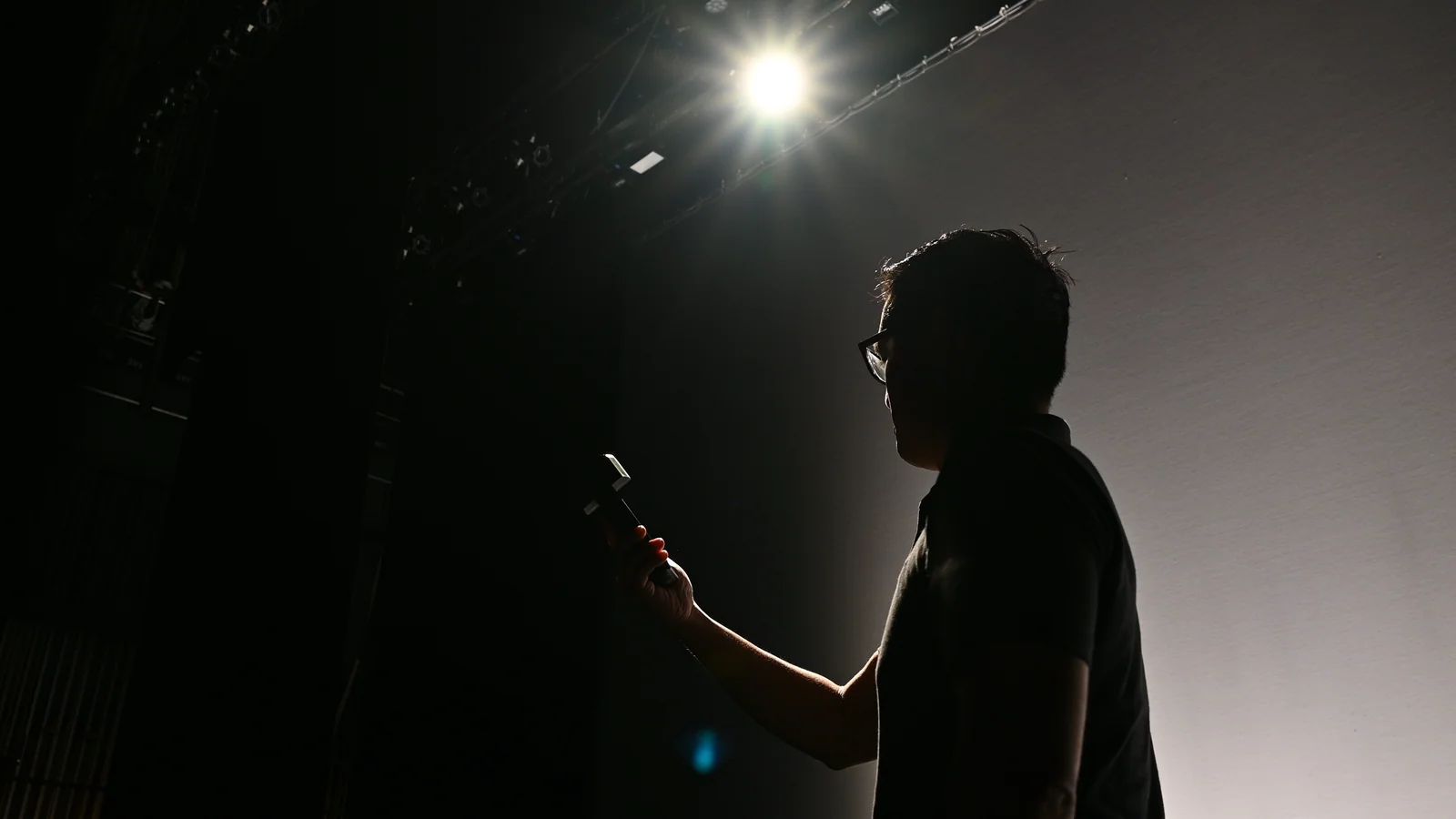
Historically, many compromises were fixed when a fixture was purchased: high output or high CRI, one source characteristic or another, a correction filter or the additional output it consumed. Modern lighting architectures can increasingly turn some of these fixed decisions into parameters that can be adapted to the application, and sometimes even to the individual scene.
Good engineering does not eliminate trade-offs. It puts the right trade-offs under control.
03.
Different priorities require different architectures
The engineering question should come before the technology. What does the application need the light to do?
A profile designed to project across a large arena may begin with a simple priority: powerful white light. Color fidelity can become important when that same fixture lights people or scenery, but maximum white-light performance remains fundamental to its purpose.
A Fresnel, PAR, panel or profile used in theatre, television or a mixed-purpose venue starts from a different challenge. White light matters, but so do saturated colors, subtle tints, skin tones and the ability to maintain a common color language across different fixture types. Here, color is not an additional function applied to the white source. It is part of the fundamental purpose of the light engine.
Neither starting point is inherently better. They optimize different priorities.
A full-spectrum approach
Where color and white are equally important, a multi-emitter engine can build both directly from its spectral components. TruSpectrum™ combines a FullSpectrum foundation with two distinct forms of optimization: ColorTuning manages the output-versus-fidelity priority within the fixture, while FixtureBalancing manages the priority between maximum available fixture performance and greater fixture-to-fixture consistency. ColorControl then translates that flexibility into familiar lighting concepts that are faster and easier to use in real production workflows.
A white-first approach
Where powerful white light is the primary starting point, a dedicated white engine remains highly effective. If color fidelity is not relevant to the application, maximum punch may simply be the right priority. TruTone™ becomes valuable where both punch and fidelity matter, making that balance variable instead of fixing it at the point of purchase. Conventional CMY mixing can provide the required color capability; where a broader subtractive palette is important, SpectraColor™ can extend it.
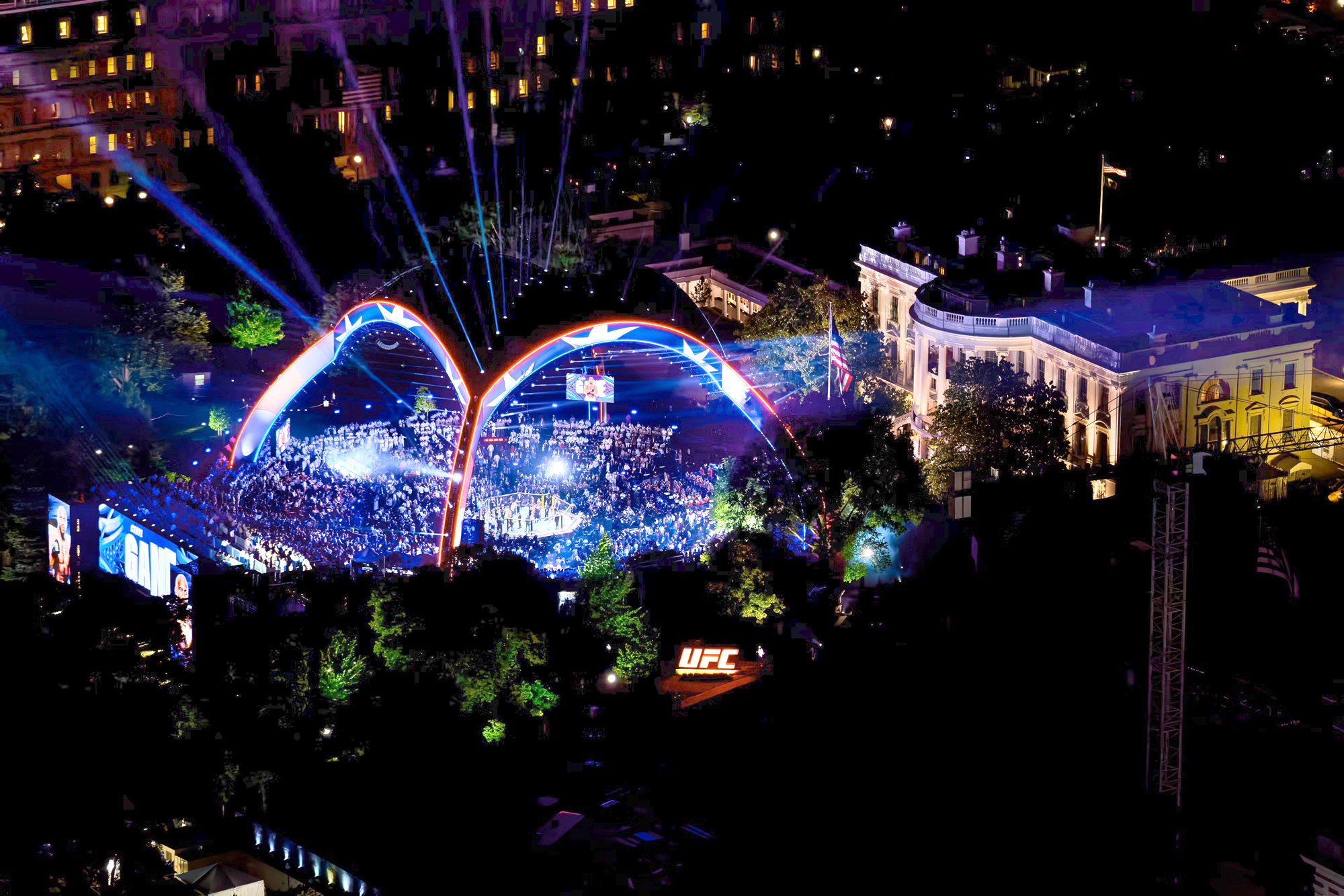
The common principle is not that every fixture should use the same technology. It is that the engineering architecture should reflect the application, and that unavoidable compromises should be placed under creative control wherever doing so creates meaningful value.
04.
TruSpectrum™ — Full-Spectrum Performance Under Control
What limits a conventional RGB engine when the same fixture must deliver saturated color, balanced whites, natural skin tones, delicate pastels and clean tints? RGB engines generate color from red, green and blue emitters. They can produce vivid primaries and a broad additive gamut, but three relatively narrow spectral peaks provide limited freedom when one engine must perform all of these tasks.
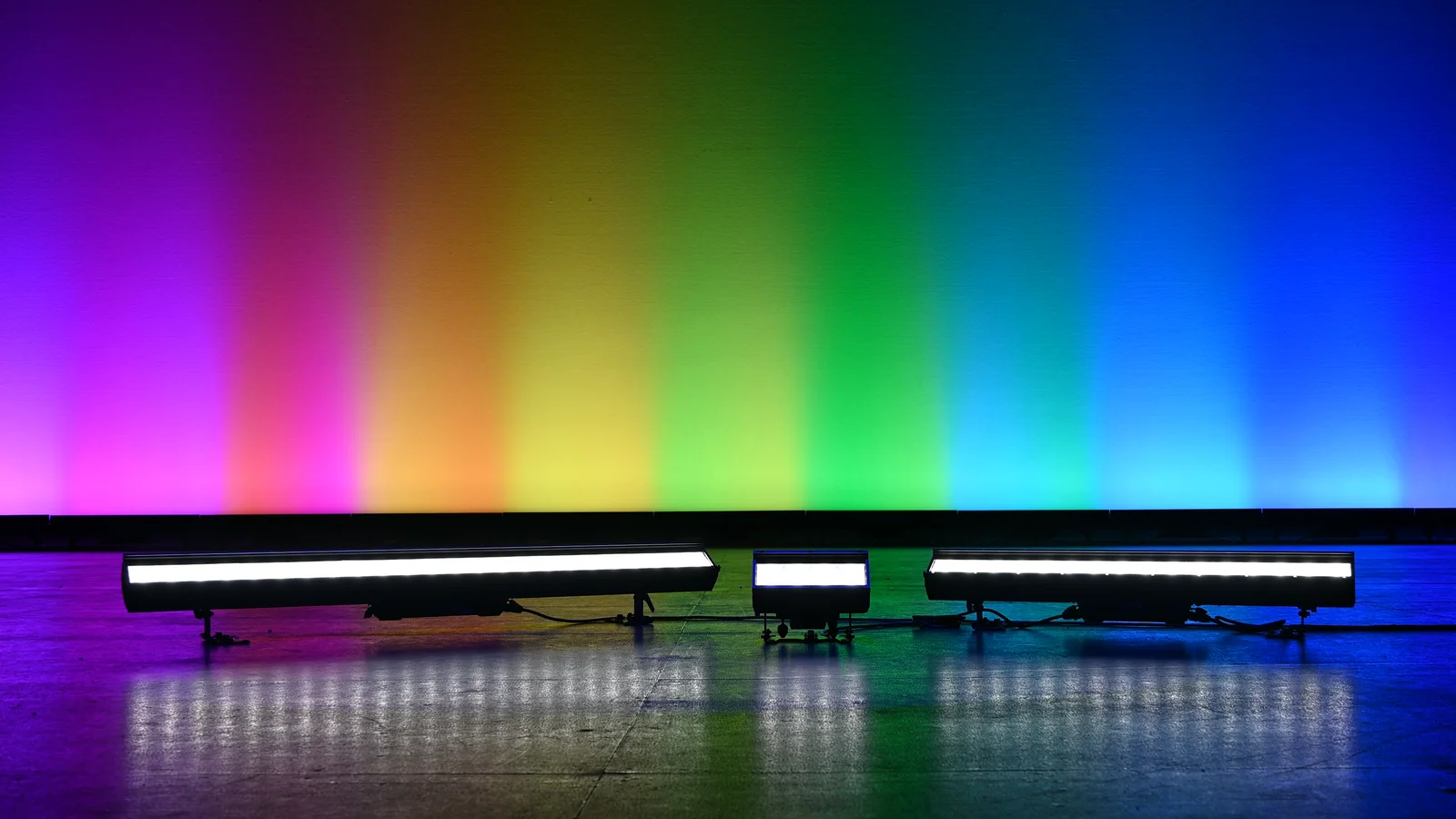
FullSpectrum is Elation’s multi-emitter approach to building a broader spectral foundation for white and color, tuned to the requirements of the application. Most FullSpectrum engines use Red, Green, Blue, Mint and Amber, or RGBMA, while specific fixture types use alternative emitter combinations where their application benefits from a different spectral balance.
FullSpectrum tuned for the application
RGBMA is the primary FullSpectrum architecture. Mint adds controlled energy in the region between green and cyan, giving the color engine more freedom to build balanced whites and manage green/magenta relationships without relying only on the RGB primaries.
Amber strengthens the warmer part of the spectrum. It improves access to warm whites, skin-tone regions, ambers, golds and warm pastels, while allowing those colors to be generated directly rather than approximated through less efficient combinations of red and green.
Together, Mint and Amber do more than add two color points. They give the engine a broader spectral foundation from which to build both white and color. But FullSpectrum is not defined by one fixed emitter recipe. The spectral architecture follows the application: the KL PANEL, for example, uses an RGBWLC engine optimized around the requirements of television and broadcast, while the SŌL Blinder adds dedicated white to support the higher white-light punch expected from a blinder.
The engineering objective is therefore not simply to add ever more emitter colors. Each additional channel introduces trade-offs in optical efficiency, driver and control complexity, and emitter density. Compact, high-density light sources are particularly important in profiles and other optical systems that depend on a small emitting surface. The goal is to use the spectral architecture that best supports the fixture’s purpose, with RGBMA providing the primary balance across much of the FullSpectrum portfolio.
ColorTuning: choosing the output-fidelity priority
A richer spectral foundation still does not remove the relationship between output and fidelity. Different combinations of the available emitters can optimize the engine for different priorities. TruSpectrum therefore adds ColorTuning, with three deliberately distinct operating choices: Highest Output, Balanced Output and Fidelity, and Highest Fidelity.
The important point is not that one of these settings is universally better. Highest Output prioritizes intensity, Highest Fidelity prioritizes color rendering, and the Balanced setting provides an intermediate operating point. The right choice depends on the application and can change with the scene. ColorTuning therefore moves an output-versus-fidelity decision that could otherwise remain fixed into the designer’s control.
FixtureBalancing: making the system more consistent
A different question appears when multiple fixtures have to work together. Even with controlled sources and calibration, LED systems retain production tolerances, and LED technology can evolve over the lifetime of a fixture family. Maximizing the available performance of every individual unit is therefore not necessarily the same as achieving the most consistent result across a rig.
TruSpectrum FixtureBalancing addresses that system-level question through Bright and Uniform priorities. Bright allows the fixture to use more of its available individual performance. Uniform prioritizes a common baseline and reduces fixture-to-fixture variation where consistency matters more than extracting the final amount of performance from every individual unit.
The most important real-world benefit appears in everyday console-based color mixing. Between compatible fixtures sharing the same FullSpectrum profile, FixtureBalancing reduces color variance while preserving the familiar workflow of mixing color from the console. Different fixture types can therefore respond more consistently to the same creative color choices without asking the programmer to adopt a different way of working.
Virtual Gels provide an even more controlled reference case. Because the target colors are defined and calibrated across compatible fixtures, variance can be minimized further than with unrestricted manual color mixing. This does not mean that identical control values can create identical colors across fundamentally different FullSpectrum profiles, nor does FixtureBalancing promise perfect matching. It provides a practical way to reduce variation in normal color-mixing workflows and to minimize it further where a calibrated color reference is available.
One color language across different tools
TruSpectrum is not limited to a single fixture category. FullSpectrum engines appear across Elation profiles, Fresnels, PARs, panels, Cycs and battens within the KL, FUZE and SŌL series. Most use RGBMA, while selected fixtures use an application-specific emitter combination. Where fixtures share the same FullSpectrum profile, that common spectral and control foundation supports more consistent color behavior across different tools in the rig.
TruSpectrum is therefore not defined by a particular emitter count. It combines a FullSpectrum foundation tuned for the application with ColorTuning of the output-fidelity priority and FixtureBalancing for fixture-to-fixture consistency. In simple terms: ColorTuning asks how you want this fixture to perform; FixtureBalancing asks how consistently compatible fixtures should perform together.
05.
ColorControl — making spectral flexibility easier to use
A flexible multi-emitter engine can produce a wide range of results, but flexibility alone does not guarantee an efficient workflow. With sufficient programming time, an experienced operator can recreate many behaviors through direct color mixing, presets, macros and cue programming. In real productions, that time is not always available.
ColorControl translates the flexibility of a multi-emitter LED engine into familiar lighting concepts, reducing the programming effort required to access its full potential. Across supported fixtures, functions can include fine CCT control, White Point Adjustment, Dim-to-Warm and Virtual Swatch Book Fade. This becomes particularly valuable when programming time is limited, but it also reduces the cognitive translation between what a designer wants the light to do and how the individual emitters have to be controlled.
The source behind the color
Physical gels never existed independently of the source behind them. The same gel could produce a visibly different result in front of a warm incandescent source than in front of a cooler discharge source. Even within one source technology, different white points could shift the resulting color.
White Point Adjustment brings that relationship into the LED workflow. Instead of CCT simply defining the resulting white light, the chosen CCT establishes the virtual white-light reference from which colors are mixed. A virtual swatch or manually mixed color can therefore behave relative to a warmer or cooler source reference, much as a physical gel historically behaved relative to the lamp behind it.
This is useful creatively, but also practically. A ColorControl fixture can be aligned more naturally with the reference CCT and color behavior of other sources in the rig without requiring the programmer to rebuild every resulting color manually.
From stepped to continuous CCT control
ColorControl provides direct access to defined CCT values as a common baseline. On selected fixtures, optional 16-bit CCT control extends this to a continuous, high-resolution CCT range. This enables fine visual matching and smooth transitions between warmer and cooler source references without visible steps.
Familiar tungsten behavior without additional programming
Dim-to-Warm links color temperature to intensity to reproduce the familiar warming characteristic of tungsten as the source dims. Where LED fixtures replace or intentionally emulate tungsten, that relationship can be created directly rather than programming intensity and CCT as separate parameters for every cue.
Faster swatch-based workflows
Virtual swatch books are especially familiar in theatre and television, where established gel references are often part of the design language. Selecting a reference color is simple; transitioning naturally between two reference colors can require more work.
Virtual Swatch Book Fade allows a start color, destination color and transition time to be defined directly. The fixture does not digitally jump from one swatch to another or step through the swatches listed between them. It creates a continuous crossfade between the selected endpoints.
In a fully programmed production, console presets and normal cue fade times will often remain the preferred workflow because they provide greater programming flexibility. The value becomes particularly clear when time is constrained, colors need to be changed quickly, or a familiar reference needs to be translated into a usable transition without first rebuilding it as a series of console presets.
The objective is not to replace established programming workflows. It is to reduce the amount of programming required when familiar lighting behavior can be handled directly by the fixture. TruSpectrum determines how the engine performs. ColorControl makes more of that performance directly accessible to the designer and operator.
06.
TruTone™ — when punch and fidelity both matter
Every high-output white-light engine faces the same engineering question: should it prioritize maximum punch or higher color fidelity? The first question, however, is whether that trade-off is relevant to the application at all.
If color fidelity is not important to the job, there is no reason to turn CRI into an artificial requirement. A high-output profile used primarily for projection, long throw, gobos or large-scale effects may simply need maximum punch. TruTone becomes relevant when the same fixture, inventory or production also has moments where people, scenery, costumes or cameras make higher fidelity valuable.
Traditionally, that could mean choosing between a high-output engine and a high-CRI version of the fixture, or starting with a bright, lower-CRI source and inserting a correction filter when better rendering was required. The filter can improve fidelity, but it does so by removing parts of the available light from an engine that was optimized for a different operating point.
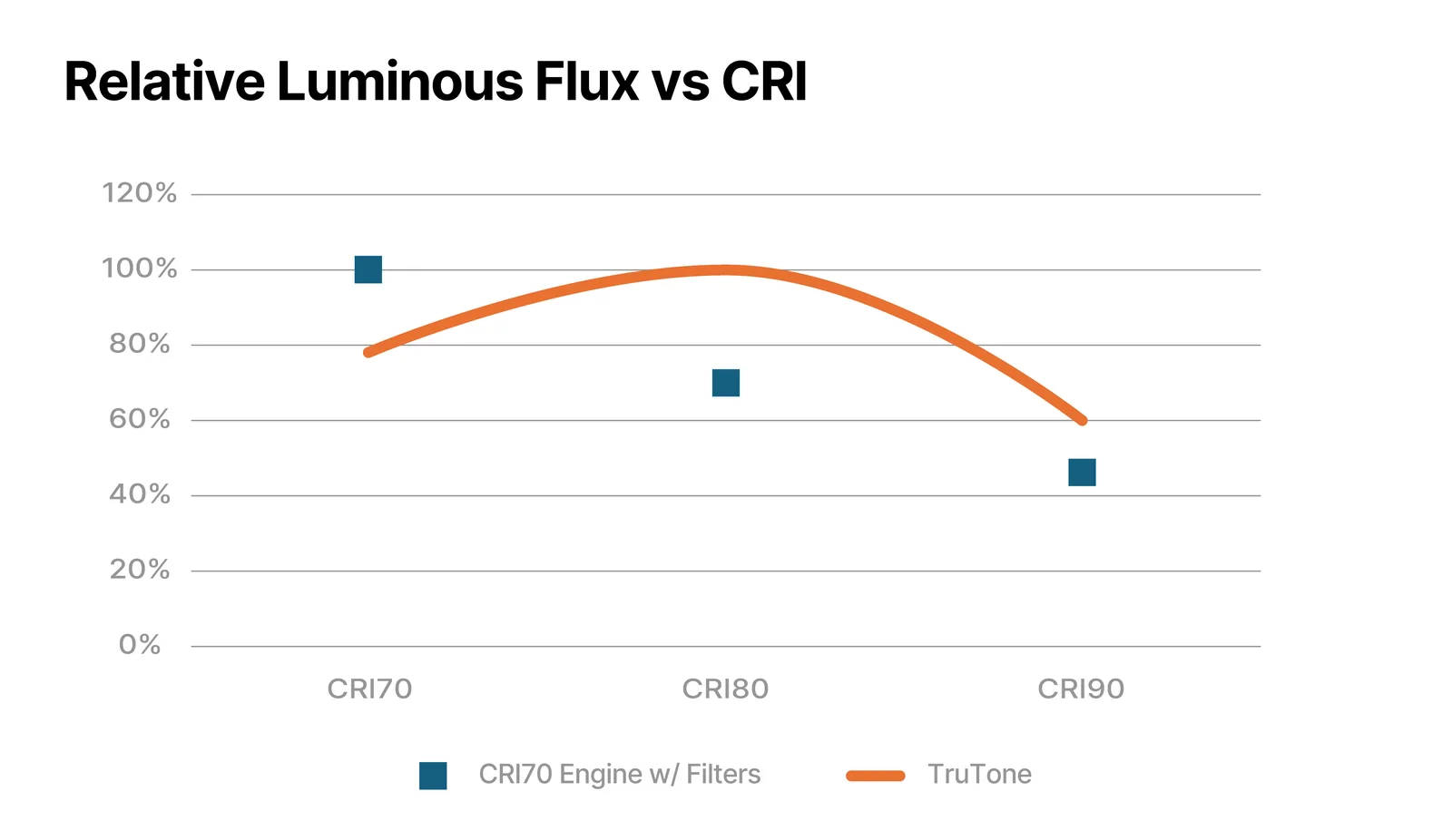
TruTone approaches the same compromise differently. Depending on the model, the fixture can move seamlessly through an adjustable CRI range. Rather than correcting a fixed low-CRI source afterwards, the engine adjusts its spectral balance for the selected operating point. Higher fidelity still costs output; the physical trade-off remains. But the engine can retain more useful punch at good CRI than a traditional bright low-CRI source corrected afterwards through a filter.
From fixed choice to relevant creative control
The value therefore depends on the application. If a production only needs maximum punch, that can remain the priority. If the same fixture needs maximum output for an arena effect and later lights a person or scenic element where rendering matters, the required balance changes. TruTone allows that decision to follow the task rather than the fixture variant.
This is not a claim that CRI alone defines Quality of Light, nor that higher CRI is automatically better. It is practical control over a real engineering trade-off when that trade-off actually matters. The designer chooses how the fixture allocates its performance according to the task.
Optimizing the compromise
The benefit is therefore more than flexibility alone. When higher fidelity is selected, TruTone optimizes the spectral balance of the engine for that operating point instead of relying simply on correction after the source. For rental companies, that can also allow one fixture to cover roles that might otherwise require separate high-output and high-fidelity variants.
TruTone therefore applies the broader Quality of Light principle from a white-first starting point: the compromise remains, but the way it is managed gets better. A decision that was historically fixed can become adjustable by application or scene, while the engine itself is optimized for the selected balance.
07.
SpectraColor™ — extending subtractive color
Additive LED mixing is not the only way designers create color. In high-output profile fixtures, a powerful white engine combined with subtractive color flags remains a familiar and effective architecture, particularly where projection quality, long throw and white-light performance are central to the application.
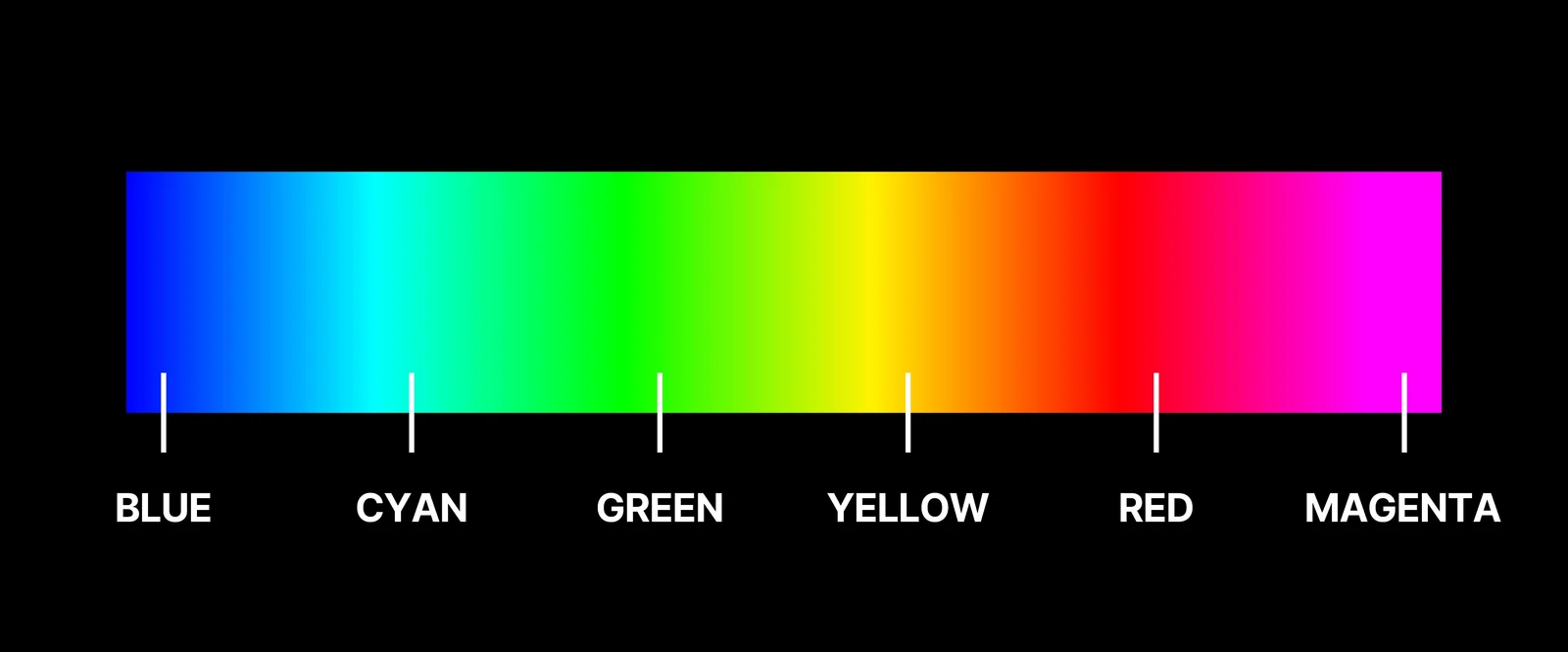
Conventional CMY mixing covers a broad palette, but some saturated primaries and intermediate shades sit in areas where cyan, magenta and yellow flags require compromises. Deep reds, clean blues, specific greens and some crossover colors can be difficult to reach with the same precision.
SpectraColor extends the familiar system rather than replacing it. It combines fully variable Cyan, Magenta and Yellow flags with fully variable Red, Green and Blue flags plus variable CTO. The result is a seven-flag subtractive system that provides additional routes through color space while retaining the programming logic of a white-source profile.
More colors, and more precise routes to them
The CMY layers continue to provide the broad, intuitive subtractive workflow designers know. The additional Red, Green and Blue layers introduce purer color points that can be used independently or combined with CMY.
A designer can begin with a CMY mix and add a controlled amount of red, green or blue to move the hue toward a previously difficult shade. The RGB flags can also provide more direct access to saturated colors that would otherwise require a more complex combination of CMY layers. For certain target colors, these more direct filtering paths can retain more useful output than reaching the same shade through a heavier combination of CMY filters.
The benefit is not simply a larger theoretical gamut. It is practical access to colors that matter in real productions, greater precision in how those colors are reached and, for certain shades, a more output-efficient route to the desired result.
An extension, not a requirement
SpectraColor is not inseparable from TruTone. A white-first fixture can combine TruTone with conventional CMY mixing where that palette is sufficient. Where greater subtractive color versatility matters, SpectraColor can extend the architecture.
Like any subtractive system, SpectraColor creates color by filtering the white source. Its advantage is not that filtering becomes lossless, but that the additional RGB color points provide more precise and, for certain colors, more output-efficient routes to the desired result. The physical trade-off remains; the available paths through it become more useful.
TruTone expands what the white engine can do with white. SpectraColor can optionally expand what that architecture can do with color.
08.
From technology to application
The value of these technologies appears when the engineering reaches the production, not when the specification is read in isolation.
Theatre and musical productions
Theatre asks one rig to move between natural skin tones, subtle whites, saturated color, scenic texture and carefully established reference colors. Different fixture types often have to coexist without drawing attention to their differences. A FullSpectrum foundation supports this range, while ColorTuning lets the designer choose the output-fidelity priority. In everyday console color mixing, FixtureBalancing can reduce variance between compatible fixtures sharing the same FullSpectrum profile; calibrated Virtual Gels can minimize it further. ColorControl reduces the programming required to translate familiar CCT, tungsten and gel-based concepts into that engine.
Television and broadcast
Broadcast places particular emphasis on predictable whites, skin tones, camera behavior and consistency across a mixed rig. Maximum output is often less important than confidence that fixtures will reproduce the intended result without creating unnecessary correction work. FullSpectrum engines can be tuned to the application, while TruSpectrum ColorTuning can prioritize fidelity and FixtureBalancing can reduce fixture-to-fixture variance across compatible fixtures. Fine CCT control and White Point Adjustment help the fixture integrate with other white-light sources and established color references.
Midsized mixed-purpose venues
A venue that moves between corporate events, theatre, music, broadcast or community productions needs fixtures that can adapt without requiring a different inventory for every use. FullSpectrum architectures provide a broad spectral foundation across different fixture categories, while ColorTuning adapts the output-fidelity priority, FixtureBalancing can reduce variance across compatible fixtures, and ColorControl adapts the workflow to the event.
Large-scale touring, arenas and long throw
At large scale, white-light punch, projection performance and throw can become decisive. Where fidelity is not relevant, maximum punch may simply be the correct operating priority. Where the same fixture also has to render people, scenery or camera images naturally, TruTone allows that white-first architecture to move toward higher fidelity without relying solely on a correction filter. Where the production also needs a broader subtractive palette, SpectraColor can extend the available color range without changing the underlying white-first architecture.
These examples are not rigid market boundaries. The technologies overlap because real applications overlap. The purpose is not to assign one technology to one vertical, but to begin with the actual lighting task and choose the architecture whose priorities best match it.
09.
Consistency Starts at the Source
Sophisticated color control only becomes useful when the source beneath it is predictable. If two fixtures begin from materially different spectral behavior, identical control values cannot be expected to produce the same visual result.
Source consistency therefore begins before ColorTuning, FixtureBalancing, ColorControl or any other higher-level function. Calibration establishes the baseline; ColorTuning optimizes the output-fidelity behavior of the fixture; FixtureBalancing manages how strongly fixture-to-fixture consistency is prioritized.
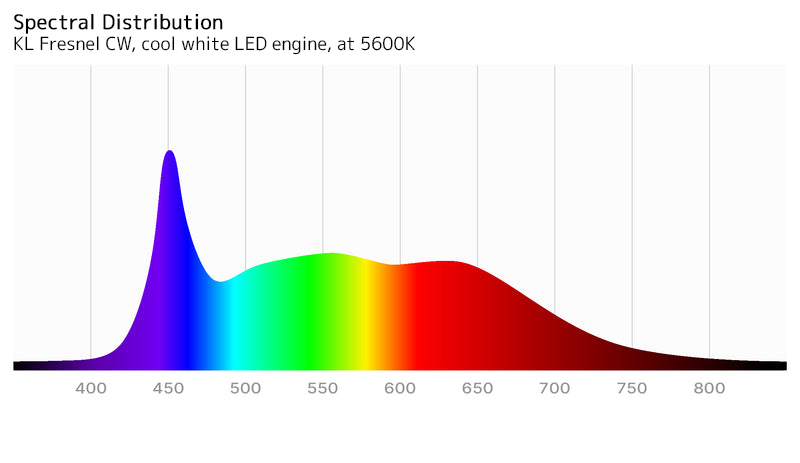
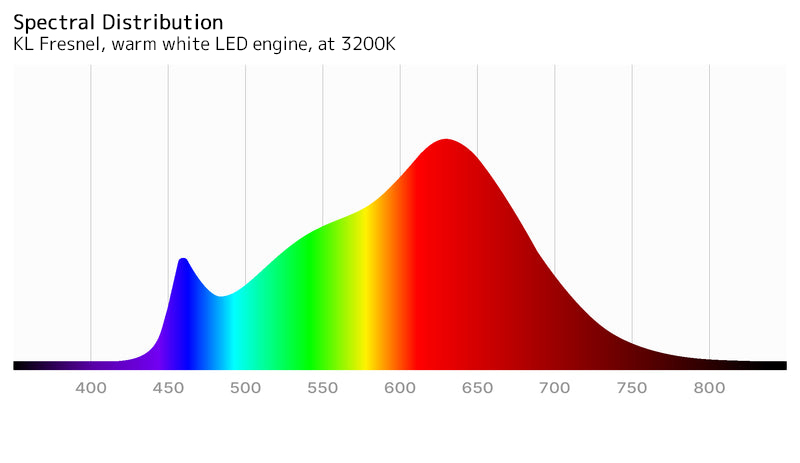
For multi-emitter engines, this means factory calibration against a defined reference so that the individual emitter channels begin from a controlled relationship. Calibration requires deliberate engineering choices. It adds production effort and can mean giving up some of an individual unit’s maximum available output in order to bring fixtures toward a more consistent baseline.
White-light sources require a different approach. A single white engine cannot be calibrated by balancing multiple color channels in the same way. Consistency instead depends on source selection, binning and controlled color tolerances so that fixtures begin within a defined range.
These are not exotic technologies, nor are they unique claims. They are fundamental engineering work required if more advanced lighting behavior is expected to remain predictable.
Source consistency is not our innovation. It is the prerequisite for our innovations to work properly.
That baseline also defines the role of TruSpectrum FixtureBalancing more clearly. Calibration establishes a controlled starting point for the individual fixture. FixtureBalancing then addresses the system-level result. In normal console color mixing it can reduce variance between compatible fixtures sharing the same FullSpectrum profile; with calibrated references such as Virtual Gels, variance can be minimized further. It does not promise perfect matching or override fundamental differences between spectral profiles.
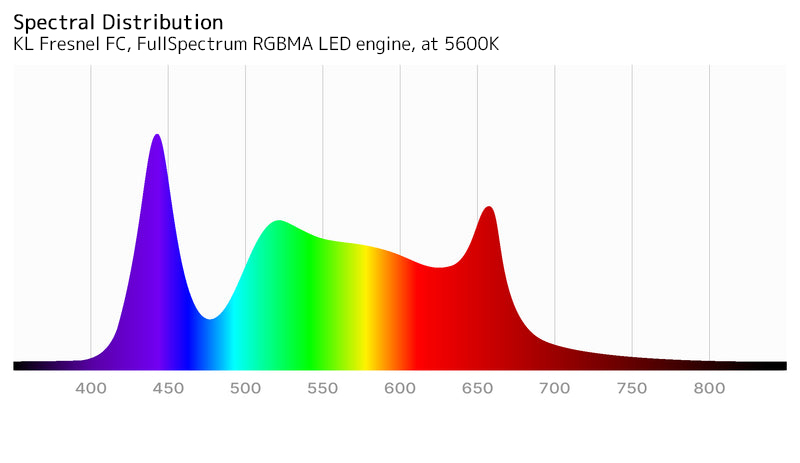
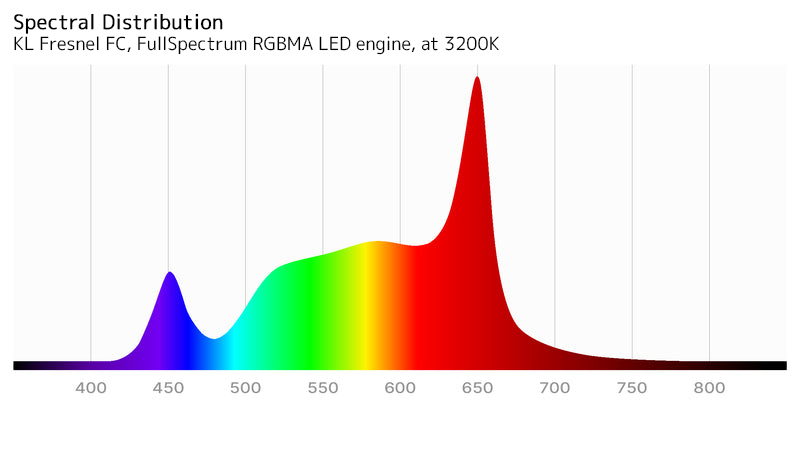
These spectral distributions graphics compare mixed white from a FullSpectrum engine with dedicated white LED sources at the same nominal CCT. The comparison illustrates that matching CCT does not mean the underlying spectral composition is the same.
10.
Quality of Light Throughout the Dimming Range
Quality of Light also has to remain convincing when intensity changes. Professional fixtures spend much of their life below 100 percent, moving through fades, operating at low levels or being captured by broadcast and high-speed cameras.
Dimming is therefore part of the engineering groundwork rather than a separate creative technology.
On supported Elation platforms, 25K Ultra Dimming combines high-resolution intensity control with PWM frequencies up to 25 kHz, supporting smooth low-level behavior and camera-sensitive applications.
Every fade is part of the image. The objective is simple: the control system should allow the spectral and color architecture of the fixture to remain useful throughout the cue.
Quality of Light therefore extends from the source architecture through the control system and into the final cue.
Quality of Light in Practice
Consider a large arena production. In one cue, maximum punch may be the priority, with powerful aerial effects and enough intensity to carry across a long throw. In the next, those same fixtures may light performers, where skin tones, costumes and camera rendering become more important. Across the rig, profiles, washes and battens may also need to reproduce a common color language, while IMAG cameras can reveal differences that are less apparent to the audience in the room.
The priorities can change from cue to cue. The objective is not to prescribe how the light should look, but to give the designer more useful choices in determining how it should perform. Output, fidelity, color, consistency and control can each take priority according to what the moment requires.
The objective is not to prescribe how the light should look, but to give the designer more useful choices in determining how it should perform
Quality of Light is not one definition of better light. It is the ability to create the right light for what the design needs to accomplish.
11.
The Right Technology, Chosen with Purpose
Quality of Light is not achieved by applying one technical answer everywhere. It begins by understanding what the application asks the light to do.
Sometimes the priority is maximum white-light punch. Sometimes it is natural rendering. Sometimes it is saturated color that retains visual authority. Sometimes it is the ability to move between all of those priorities.
And sometimes the most important requirement is that a diverse group of fixtures behaves as one coherent system.
TruTone begins with a white-first architecture and becomes relevant where both punch and fidelity matter, making that balance adjustable while optimizing the engine for the selected operating point. TruSpectrum combines a FullSpectrum foundation tuned for the application with ColorTuning and FixtureBalancing: ColorTuning manages the output-fidelity priority within the fixture, while FixtureBalancing reduces variance across compatible fixtures and can minimize it further around calibrated color references.
ColorControl translates that spectral flexibility into familiar lighting concepts and reduces the programming required to use it. SpectraColor extends subtractive color capability where a white-first architecture requires a broader palette and more direct routes to difficult colors.
Beneath those technologies sits less visible engineering work: controlled sources, calibration where appropriate, defined tolerances and dimming behavior that preserves the result throughout the cue.
The technologies are different because the problems are different. What connects them is a common engineering philosophy.
The compromise itself is unavoidable. What modern engineering can change is whether that compromise remains permanently built into the fixture or becomes a choice the designer can make according to the application.
Great lighting is not measured simply by how much light leaves the fixture.
It is measured by what that light makes possible.
When the technology disappears and only the creative vision remains, the lighting has done its job.
That is Quality of Light.